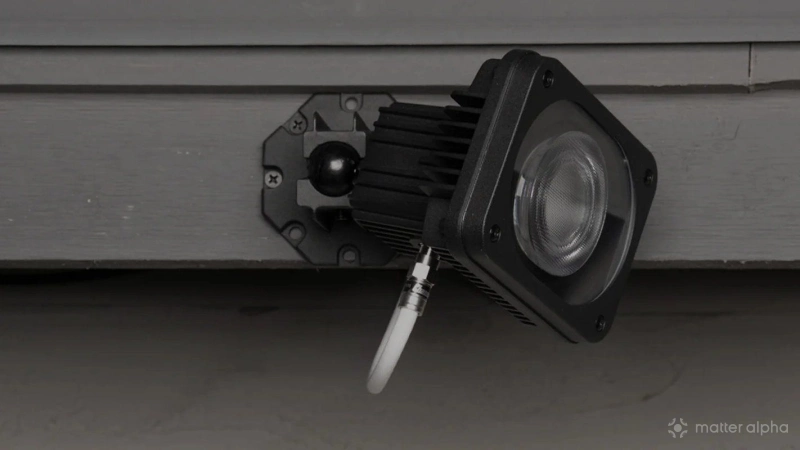
Outdoor lighting has a bit of a problem: range. Dead zones are a problem for Wi-Fi, and remote devices need a reliable power source, which is preferable to batteries or solar power. Power over Ethernet (PoE) is an option, but while it provides data and power to a device, it isn’t intended for outdoor use, where direct sunlight can damage the outer sheath and allow moisture to corrode the copper cable inside.
Coaxial is a much more reliable alternative, designed for use outdoors (usually fixed between satellite dishes and TV sets), and has now been employed by Channel Master for its first smart home product, the Pro Floodlight. This is believed to be the first time a coaxial cable has been used to supply power and data to a smart home device, and it is intended to be used with Apple Home.
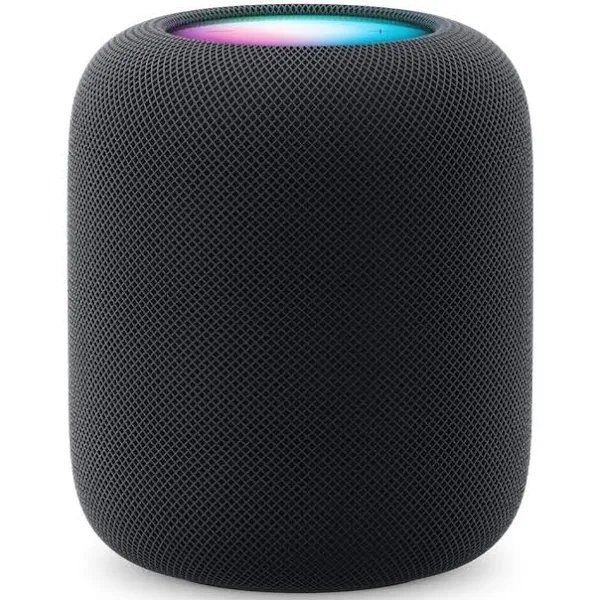
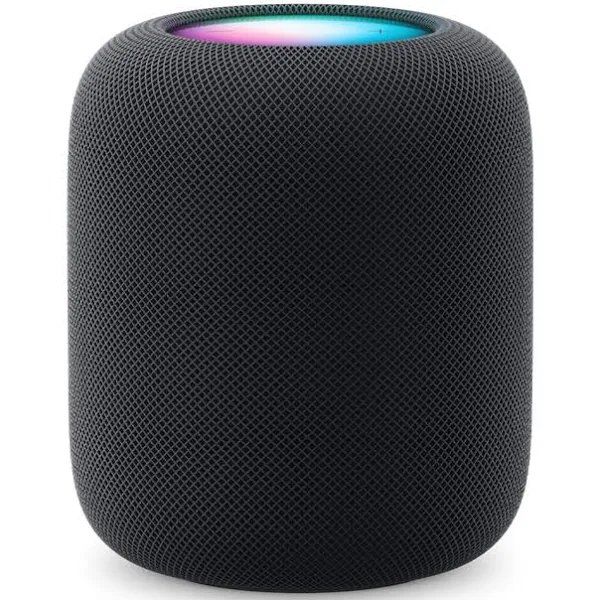
Apple HomePod (2nd Gen)
How the Channel Master Pro Floodlight works
In the box, you get the floodlight, a mounting kit, a power converter unit that also acts as a wireless networking relay, and 150 feet of coax cable.
This coaxial length has a few advantages:
-
You can position the floodlight in zones where Wi-Fi doesn’t reliably reach
-
The cable supplies power and data to the light, enabling smart home integration
-
It is reinforced to withstand UV and other outdoor challenges
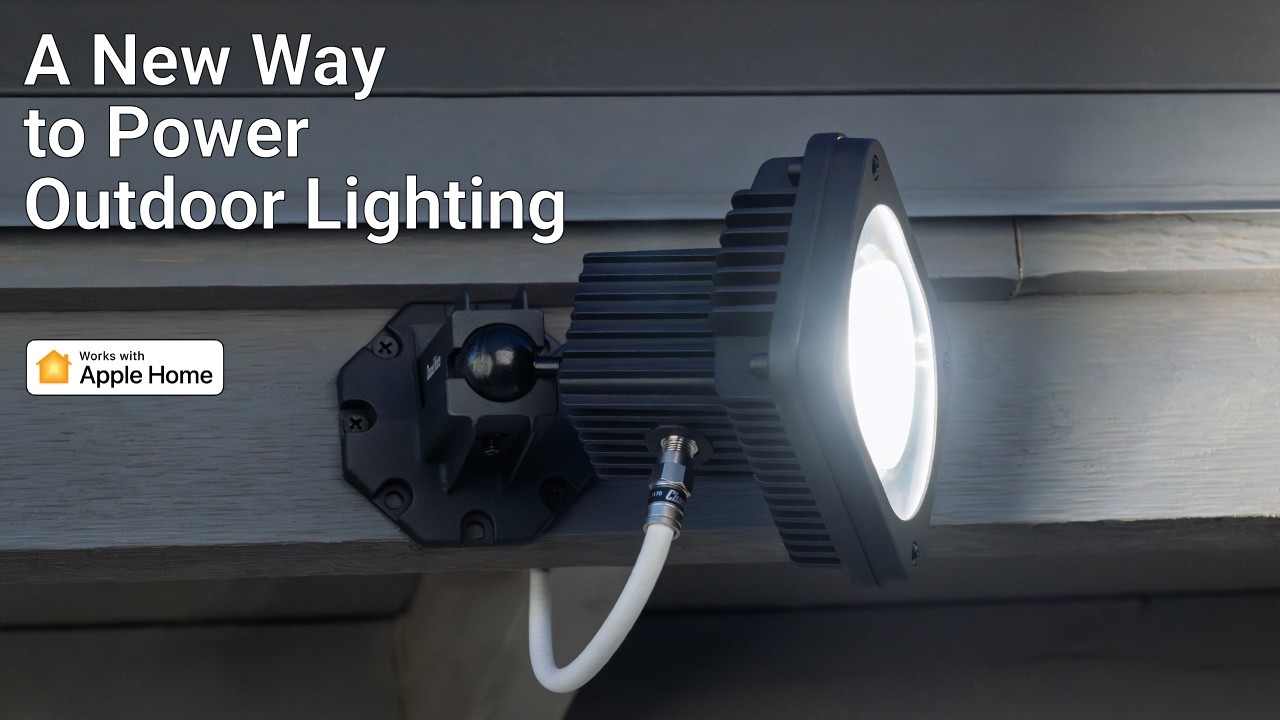
Meanwhile, the floodlight is mounted in a rugged, all-metal unit and can deliver 2,000 lumens. While the device doesn't currently have Matter support, it works with Apple Home (still also referred to as HomeKit) and its design makes it suitable not just for lateral distance (outbuildings, large yards, gardens), but for height, too. So, it’s ideal for mounting on a high wall, roof ridge, post, or other lofty structure.
Once the relay/power unit is connected to your wireless network (using a device like the Apple HomePod), the floodlight can be remotely controlled as part of your smart home.
I thought Channel Master made TV antennas?
If you’ve ever cut the cord or had cause to move cable TV, install satellite TV, or erect an antenna, you’ve probably used Channel Master’s hardware. They have been in the industry for decades, providing solutions that rely on, well, coaxial cable.
When you look at it like that, this doesn’t seem quite as big a pivot.
Coaxial also means simpler installation than hiring an electrician, can save you money, and delivers a high-output, low latency smart lighting solution outdoors, without worrying about Wi-Fi signal strength.
Can coaxial make an impact in the smart home market?
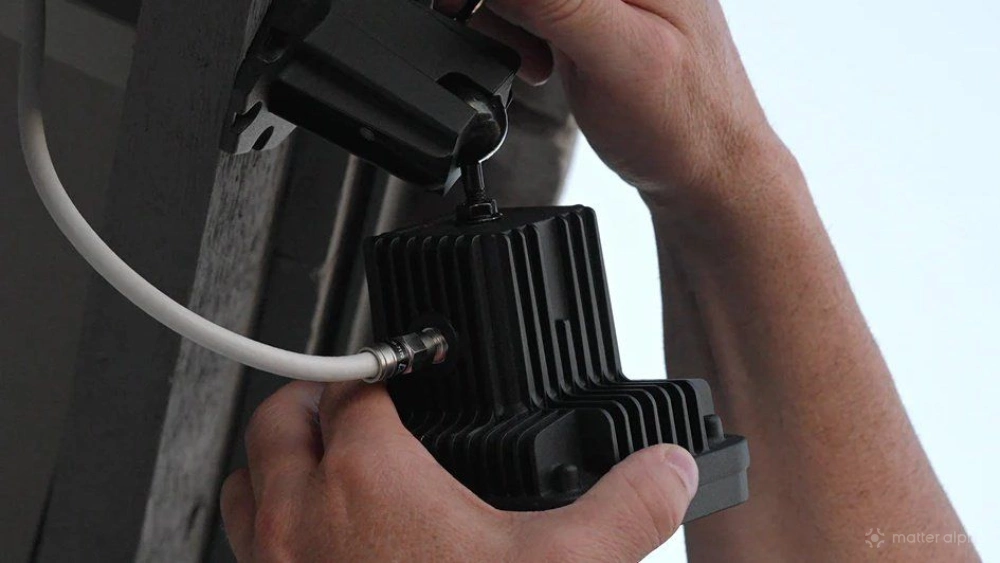
Although Power over Ethernet offers a reliable option for devices like security cameras, the cable is typically not exposed (rather, it is fed through a cavity from the building’s interior, into the back of the wall-mounted camera). As Ethernet cabling is not suitable for exposure to the elements, the alternative is placing it in conduits and/or burial.
The coaxial employed by Channel Master with the Pro Floodlight is reinforced, intended to be used outdoors. It also gives you a more reliable power supply than a battery or solar-powered lamp. Given the floodlight emits 2,000 lm, it needs to draw power from the grid, rather than the sky.
Could coaxial work with other devices? Other outdoor smart home tech like lighting and irrigation immediately come to mind, as do security cameras. But coaxial could also prove useful within the home. Many properties still have a coaxial infrastructure, and with suitable adapters, this could be repurposed to provide power and data across a smart home, far more reliably than Wi-Fi and Ethernet.
The Channel Master Pro Floodlight is now available to preorder, priced $199, and is expected to ship in 6–8 weeks.